Why NHBB Bearings with Minelon® Liners Are the Ultimate Choice for High-Performance Aerospace
Redefining Reliability with NHBB Bearings
In the high-stakes world of aerospace engineering, component failure is not an option. This is where NHBB bearings distinguish themselves from the competition. By integrating advanced Minelon® and Oscimax® machinable liner technologies, NHBB bearings deliver a level of performance that traditional bonded liners simply cannot match. For design engineers seeking to maximize uptime and reduce maintenance costs, specifying NHBB bearings with these homogeneous self-lubricating liners is the smartest move you can make.
The Engineering Edge: Homogeneous Machinable Liners
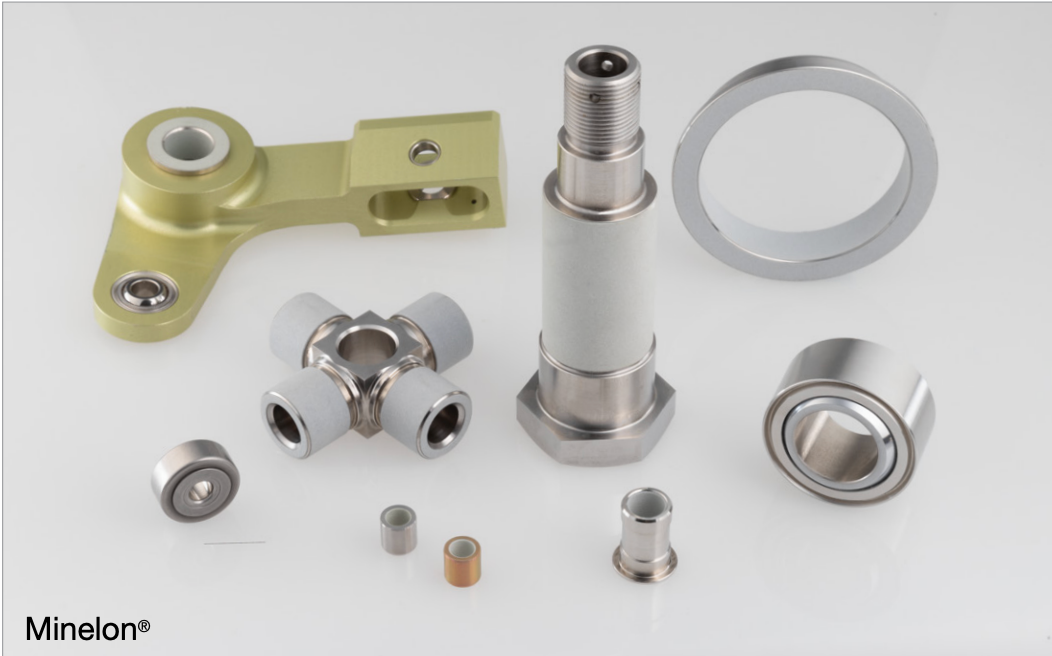
What makes NHBB bearings so durable? It starts with the material science. Unlike standard bearings that rely on a thin, glued-on film, NHBB bearings utilize a liner that is a homogeneous mixture of thermosetting resins, PTFE, and reinforcing compounds.
Full-Depth Machinability: Because the lubricant is embedded throughout the entire thickness, you can machine NHBB bearings to exact tolerances after the liner is applied. No more worries about delamination or inconsistent wall thickness.
Custom Thickness: Whether you need a ultra-thin 0.007 in layer or a robust 0.040 in cross-section, NHBB bearings can be tailored to your specific load requirements.
Unmatched Load and Wear Performance
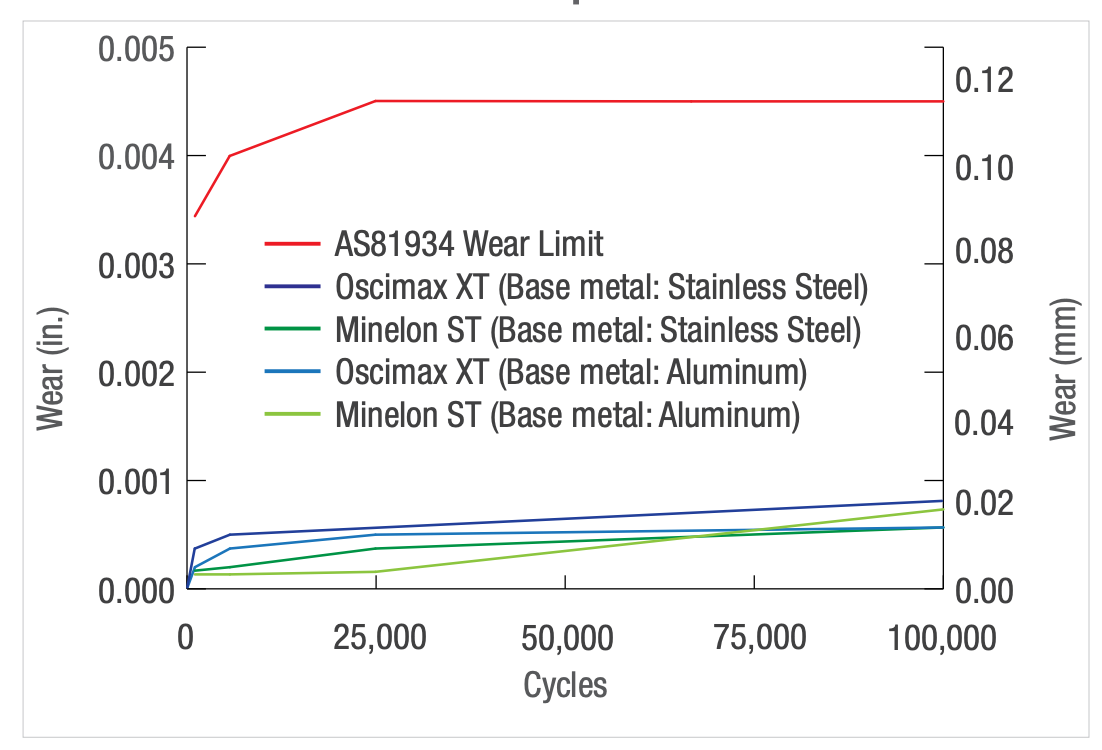
Data doesn’t lie. Testing under rigorous AS81934 standards shows that NHBB bearings equipped with Oscimax® XT or Minelon® ST liners outperform industry benchmarks.
Static Loads: Capable of withstanding up to 80,000 psi, ensuring NHBB bearings hold up under extreme static stress.
Dynamic Durability: In oscillating tests up to 100,000 cycles, NHBB bearings demonstrated wear rates as low as 0.0003 inches, far below the allowable limits.
Low Friction: With a coefficient of friction between 0.03 and 0.10, NHBB bearings ensure smooth actuation for critical flight control systems.
When you choose NHBB bearings, you aren’t just buying a part; you are investing in a proven track record of survival in the harshest environments—from freezing stratospheric temperatures to scorching engine nacelles.