NHBB Rod End Bearings
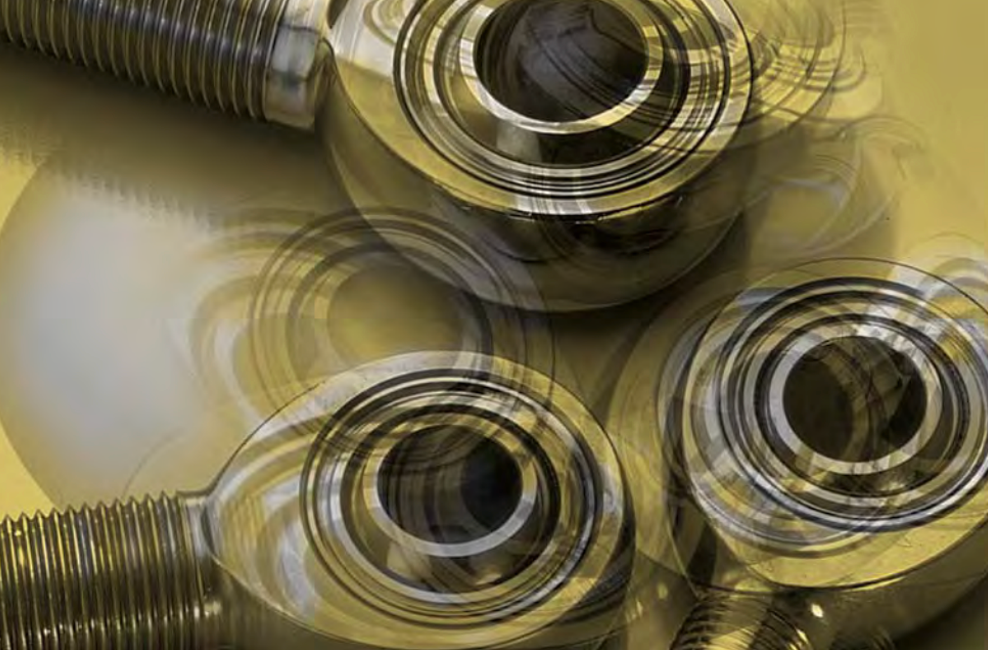
In the aerospace industry, every critical component directly affects flight safety and mission success. Rod End Bearings are among the key mechanical connection parts used in actuation and linkage systems, and they must operate reliably under high loads, extreme temperatures, corrosion, and continuous angular misalignment.
For decades, New Hampshire Ball Bearings (NHBB) has built a strong reputation through advanced engineering and strict manufacturing standards. Its full range of standard and customized rod end bearings are widely used in aircraft ranging from small private planes to large long-range commercial jets, delivering highly reliable, precise, and long-life bearing solutions for aerospace applications.
NHBB rod end bearings are found throughout critical aircraft systems. They are commonly used in engine mounts, where they absorb vibration and shock generated during engine operation while withstanding high temperatures and constant vibration. They are also installed in landing gear down-lock struts, carrying enormous impact loads during takeoff and landing while allowing multi-angle movement during gear deployment.
In wing flap actuators, aileron linkages, and rudder control systems, these bearings ensure accurate transmission of flight control commands under low-speed oscillating movement and frequent start-stop conditions. They are also heavily used in helicopter rotor systems and propeller pitch control assemblies, where components must survive alternating loads and severe angular movement. Specialized systems such as the INVINSYS® pitch link bearing system are designed specifically for rotorcraft requiring exceptional fatigue life and long-term stability.
NHBB designs its rod end bearings around three core principles: high adaptability, performance, and durability. The product range mainly includes two structural styles: two-piece forged constructions and three-piece swaged assemblies.
The two-piece forged design provides extremely high strength and excellent spherical conformity for heavy load conditions. The more common three-piece construction uses a spherical bearing pressed into a machined rod end body and mechanically retained through swaging, offering a good balance between strength, installation flexibility, and precision machining.
NHBB also offers a wide range of thread configurations including metric and inch threads, internal or external threads, and both left-hand and right-hand versions. This allows the bearings to fit many different aerospace installation layouts.
To meet demanding aerospace environments, NHBB developed a broad material matrix. Cadmium-free 440C, 13-8Mo, and 17-4PH stainless steels comply with modern aerospace environmental standards while avoiding cadmium plating contamination. Inconel 718 nickel-based alloys and titanium alloys are used for extreme temperature conditions ranging from -54°C to 163°C. Stellite cobalt-based alloys improve wear and corrosion resistance in naval and marine aircraft environments. For more common aerospace applications, SAE 52100 bearing steel still remains a cost-effective and dependable option.
One of NHBB’s strongest technical advantages is its self-lubricating liner technology. The company provides more than sixty proprietary PTFE liner combinations, with popular series including AD, AK, K, DD, DH, and HT liners.
AD, AK, and K liners are commonly used in fixed-wing aircraft actuation systems, while DH (L-1480) liners are developed for rotorcraft exposed to alternating loads. HT high-temperature liners can survive temperatures between 230°C and 330°C, making them suitable for engine-adjacent assemblies. All of these liners operate without external lubrication, reducing maintenance requirements and lowering friction during service. Thats especially important in sealed aerospace systems where maintenance access is difficult.
NHBB also offers a variety of protective surface treatments and integrated design options. Cadmium-free passivation, hard anodizing, hard chrome plating, and Viton sealing solutions improve corrosion resistance and wear protection in humid or salt-spray environments. Most solutions are compliant with RoHS and European environmental regulations.
Additional integrated features such as anti-rotation slots, locking grooves, dust seals, and stress-relief loading slots can also be added directly into the bearing structure, reducing the need for extra hardware and simplifying final assembly.
NHBB classifies its rod end bearings into four major standard series based on lubrication method, structural design, material properties, and load capability.
The first and most widely used category is the self-lubricating rod end bearing series. These bearings use PTFE liners and require no external grease. They are ideal for medium-load, low-speed oscillating aerospace applications. Standard series include AS81820 and AS81935/2 and /4. Inch sizes typically range from 3-24 series, with bore diameters from 0.19 to 1.5 inches (4.8-38.1 mm). Typical models include ARB4-54FN and AFDU4-5, commonly used in general aviation control linkages.
The second category is the corrosion-resistant self-lubricating series. These use stainless steel materials such as 13-8Mo, 17-4PH, and 440C combined with corrosion-resistant coatings. They are widely used in carrier-based aircraft, seaplanes, and marine aviation equipment. Standard series include M81820/2, M81820/3, and AS81935/6-9 cadmium-free stainless variants. The dimensions are designed to directly replace traditional cadmium-plated aerospace bearings while meeting newer military and European environmental standards.
The third category is the metal-to-metal rod end bearing series. Unlike self-lubricating types, these bearings use direct metal spherical contact and are capable of handling extremely high loads, impact forces, and elevated temperatures. Periodic lubrication is still required. Standard series include MS14101-14 and AS7949. Some heavy-duty models can reach bore sizes up to 2 inches. Typical aerospace uses include landing gear structures, engine support assemblies, and cargo aircraft hinge systems.
The fourth category is the loading slot rod end bearing series. These bearings incorporate special stress-relief loading slots inside the raceway to optimize load distribution and significantly improve fatigue life. They are mainly designed for helicopter rotor systems and high-frequency oscillating structures. Both self-lubricating and metal-to-metal versions are available. Combined with the INVINSYS® pitch link system, these bearings can survive millions of load cycles without failure, which is honestly pretty impressive.
Beyond its standard product range, NHBB also provides highly specialized custom bearing development for extreme aerospace conditions. The company can manufacture miniature rod ends with bore sizes as small as 0.125 inches (3.175 mm) for UAVs and precision aerospace instruments, while oversized versions can reach 2 inches (50.8 mm) for large commercial aircraft and heavy helicopters.
For ultra-high temperature environments, NHBB develops special bearings using Inconel 718 and HT liners capable of operating from -150°C up to 330°C. Heavy-load versions use reinforced forged structures combined with Stellite spherical surfaces, increasing static load capacity by over 40 percent.
Large angular-misalignment designs can achieve up to ±25° articulation, well beyond the normal ±12-20° range found in standard aerospace bearings.
NHBB also develops many special structural configurations including sealed types, flange designs, integrated anti-loosening versions, and sensor-mounting configurations. All custom products can be manufactured according to AS9100, AS81820, and MIL-STD aerospace quality standards, with full traceability documents, material certifications, and fatigue test reports available for aviation certification programs.
From simulation and material selection to prototype testing and full-scale production, NHBB provides complete engineering support throughout the entire development process. This ability to combine advanced engineering with practical aerospace experience is one of the reasons why NHBB rod end bearings continue to be trusted across both military and commercial aviation markets worldwide.