Schaeffler Partners with Qianxun AI to Boost Humanoid Robot Development, Surging Demand for Robot-Specific Bearings
Schaeffler has recently signed a strategic cooperation agreement with Qianxun AI. The two enterprises join forces to accelerate the application of humanoid robots on industrial production lines, driving robust market demand for high-precision bearings used in robotic equipment.
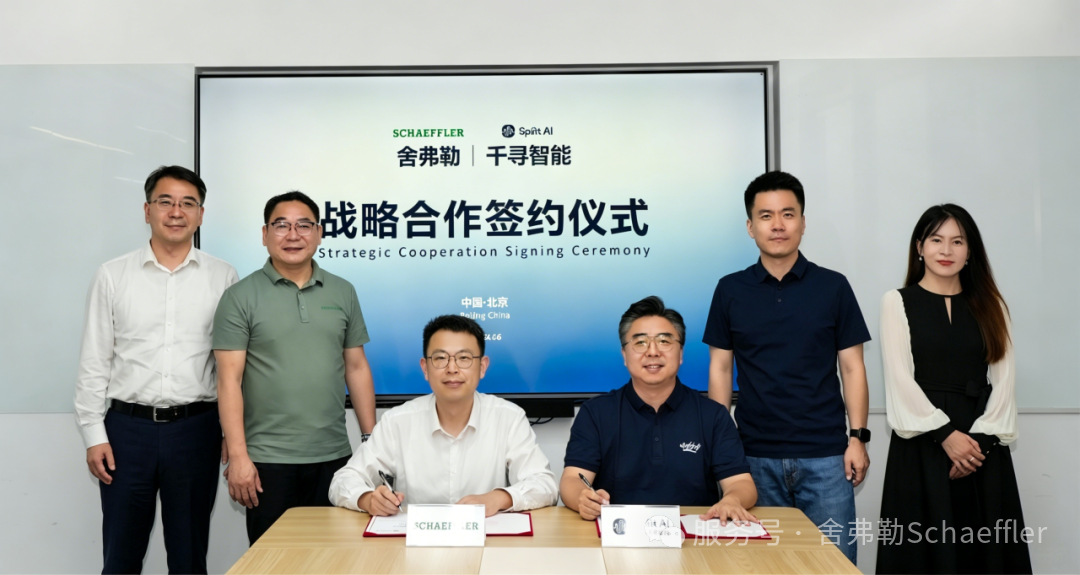
This cooperation delivers mutual benefits between a leading hardware manufacturer and a professional robotic AI developer.
With decades of expertise in bearings and precision transmission systems, Schaeffler boasts solid hardware manufacturing capabilities. Leveraging its mature production capacity for automotive components, the company mass-produces core parts for humanoid robots, including high-precision rotary joints, miniature bearings, sensors and electric lifting columns. Robotic joints account for the largest proportion of overall robot costs. As a core component inside joints, precision bearings directly determine robots’ operating accuracy and service life.
Global automotive market demand is slowing down, putting pressure on Schaeffler’s traditional automotive bearing business. The group is actively exploring new growth tracks, and humanoid robots have become its key secondary growth driver. Schaeffler has set up a dedicated robotic subsidiary in Taicang to focus on the R&D and production of robot transmission parts. However, the company lacks independent robotic AI algorithms, making its hardware products poorly adapted to real factory operating scenarios.
As a top domestic embodied intelligence enterprise, Qianxun AI focuses on developing robotic AI control systems and finished humanoid robots. Its robotic products have been applied to actual production lines for box folding and sorting with fast commercialization progress. Nevertheless, Qianxun AI faces supply chain bottlenecks. It relies heavily on external suppliers for high-precision bearings and joint components, resulting in unstable lead time and uncontrollable procurement costs.
The partnership perfectly complements each party’s strengths. Qianxun AI will secure a stable upstream supply chain via long-term procurement of Schaeffler’s transmission parts and custom robot bearings. Both sides will also jointly develop customized bearings tailored to actual robotic working conditions. In return, Schaeffler optimizes parameters of its bearings and joint components with Qianxun AI’s algorithm technology and on-site application data, making hardware parts more suitable for real industrial scenarios.
Based on our first-hand bearing trading data from our dual platforms in Shanghai and Singapore, the industry demand landscape has changed evidently. Previously, orders for robot bearings were mostly small-batch trial orders with scattered demands. This strategic cooperation will greatly speed up the mass production of industrial humanoid robots, bringing large-volume centralized procurement demands for thin-wall bearings, cross roller bearings and lightweight high-precision bearings specially designed for robots.
Following new energy vehicles, humanoid robots have become the most promising growth track for the global bearing industry. Major bearing manufacturers worldwide are increasing investment in robot-specific precision components. Market competition is also evolving. Product price and basic precision are no longer the only competitive advantages. Customized bearings matching robotic operating scenarios will dominate future market competition.
Supported by our local warehouse in Shanghai and overseas warehouse in Singapore, our platform will keep tracking real-time market trends and original factory price fluctuations of robot bearings. We provide reliable one-stop procurement solutions for upstream and downstream clients to seize new business opportunities brought by the booming embodied intelligence industry.